
Stop paying for apps nobody signs in to anymore.
An app nobody signs in to anymore sends no signal: there are no complaints, nobody asks for it, and the payment stays exactly the same. Mapit shows which apps those are, so you cancel not just a few licenses but the entire subscription.
Why apps keep running, and what you do about it with Mapit
An app without users
The app was once needed and widely used, but people left and new colleagues chose new apps. That is how the app ended up with zero users. What used to be invisible, you now see in Mapit.
The team switched, the subscription did not
Better apps keep coming, so it makes sense that the team switches. The old subscription simply stayed active, because nobody cancelled it. Now you see in black and white when someone last signed in, and that backs up the cancellation.
A trial month that was never cancelled
Trying an app for a month happens more and more. Too often, someone forgets to stop it afterward, so the payments simply continue. Now you see such an app when there has been no sign-in activity for thirty days. You decide what happens next: keep it or cancel it.
An app that is still used, but by fewer people
Then it is not about the entire subscription, but about the licenses nobody opens. You reduce those instead of cancelling; see Unused licenses.
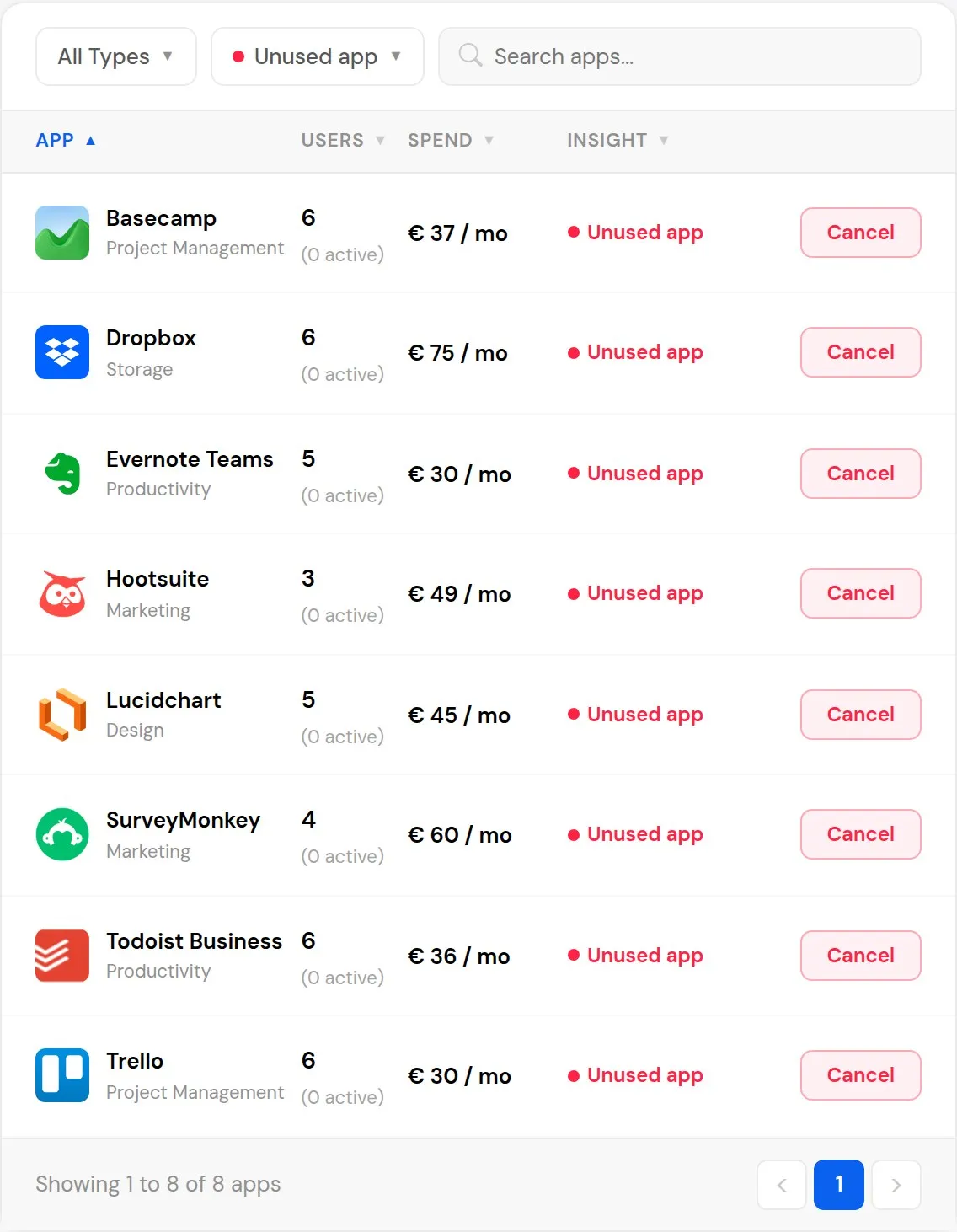
Connect and done: one connection to Google Workspace or Microsoft 365 plus a browser extension, no IT project. The overview stays accurate without anyone maintaining it. No lists, no credit card statements, no finance admin, no digging around.
Find out which apps you can cancel.
Frequently asked questions
Why do apps nobody uses anymore keep running?
Subscriptions renew automatically, monthly or annually, and send no signal when usage stops. The app keeps working, the invoice stays the same, and even at renewal hardly anyone looks at it.
How does Mapit know whether an app is still used?
At the start you see which apps are running and who has access to them, but not yet who uses them. After thirty days, Mapit breaks the link between the user and the app. Anyone still using the app simply signs in again. If that doesn't happen, after another thirty days we know for sure there was no usage, and we show that.
What is the difference between an inactive app and inactive users?
With an inactive app, nobody signs in anymore. You cancel it. With inactive users, only some of the people with access still work in the app. There you reduce the number of licenses.
What do we do with free apps nobody uses anymore?
A free app costs nothing, but there are people with access in it and sometimes company data. Those apps are in the same list, so you can revoke the access or assign a budget owner and a gatekeeper.
How does cancelling work?
In Mapit you revoke the access and click through to the vendor to cancel the app there. If you do it later, you keep track in Mapit of what has already been taken care of.
What if an app is only used a few times a year?
Then it shows as inactive in the list for most of the year. That is not advice to cancel. It is the reason to assign a budget owner and a gatekeeper, so someone knows why the app stays.